
Master Of Pottery Fan Review: Throw, Fire, Giggle
A cheap, finished pottery sim whose hardest boss is still the kiln clicker.
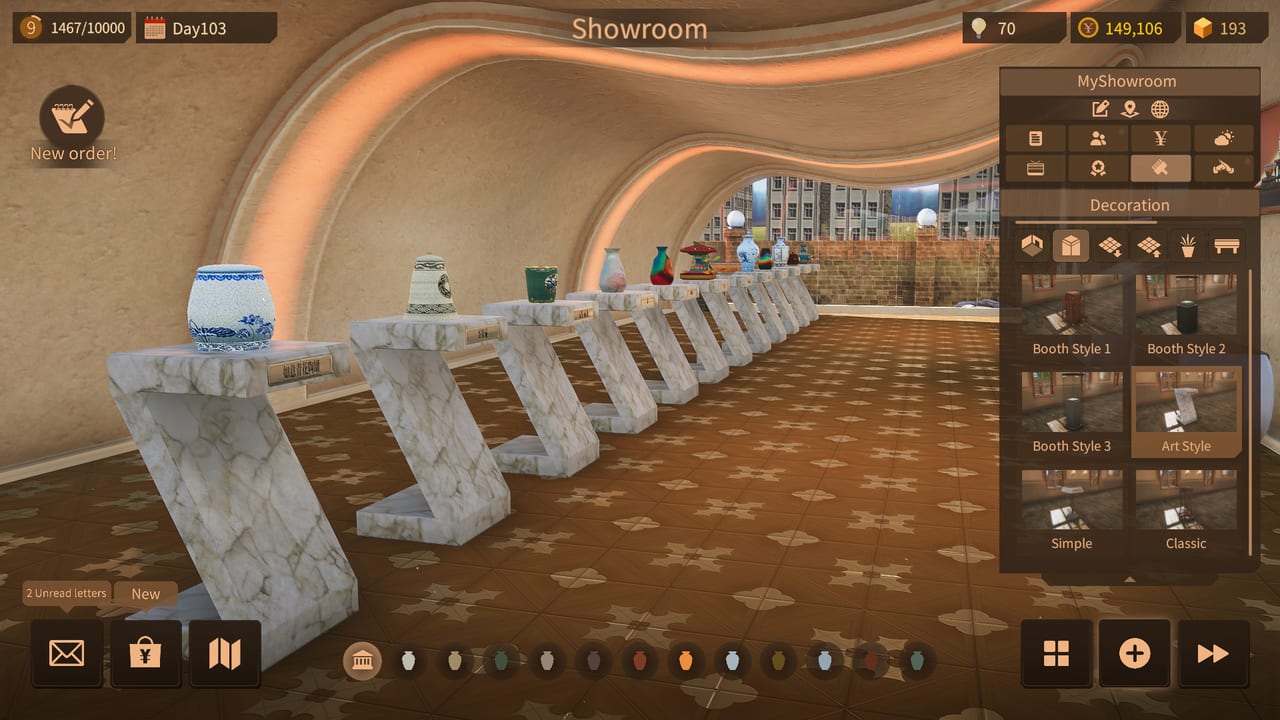
Master Of Pottery is a relaxing game that keeps daring you to be stupid. You sit at a wheel, pull a cylinder, attach a ridiculous spout, paint a joke on the belly, and then the kiln minigame tries to humble you. That mix is the whole review. AZGames shipped a creation-plus-simulation loop that is gentle on the calendar and sharp on the fire pass. Version 1.0, out 10 September 2026, makes the package feel complete without turning it into a different genre.
This is a fan review, not a Metacritic export. Steam sits Overwhelmingly Positive, around 97 percent. Buried Treasure’s 2020 write-up already loved the systems and admitted the English was a rough pass from Chinese. Japanese players built a huge Let’s Play and collab scene around 陶芸マスター. Italian is an official language too. The game is cheap (about $5.99 / ¥700, with a launch discount window). It is Windows-only with Steam Deck Playable. It is not a live-service, and it is not unfinished anymore.
The relaxing half
Throwing is the good kind of slow. You nudge walls, open a lip, add a bulge, and the vessel becomes a shape you meant. Painting and glazing are the reward: colours, patterns, custom images, DLC motifs if you bought them. Exhibitions turn the workshop into a tiny business. Tourists walk, tickets add yen, someone might mail you a purchase. Apprentices show up after reputation 500 and make the hall feel inhabited. Orders, including the Tea House teacup and teapot jobs around day 33 and 41, give you a reason to make a specific form instead of infinite vases.
You can play it straight: late clay, careful strokes, style match, SSS. You can play it as Buried Treasure did: fat teapots, tiny handles, the review text glazed onto the side. Both are correct. The sim does not scold you for being childish. It scores the work, then lets tourists decide whether they like it.
The silly half
The English UI is awkward. Achievement names, tutorial lines, and store labels read like a first translation pass. That is part of the charm and part of the friction. You will mis-click a kiln stage because the word is weird. You will still understand the loop. Japanese streamers often play it as a talk show with clay, which is why the community feels larger than the concurrent-player count. The wine-glass session embedded on this page is the right energy: sit down, make a glass, narrate the mess.
There is no shame in making ugly cups on purpose. The hall will still open. Someone will still take a photo. Version 1.0’s live tourist comments even tell you, in their own stiff English, which ugly cup they like.
The hard bit: the kiln
Buried Treasure called the firing pass an abysmal mouse-click minigame about keeping the pot on fire the right amount. That is still the skill check. Drying, preheating, high temperature, inside-out. Miss it and the expensive glaze was a donation. Second firing after decoration is kinder. The first fire is the boss.
If you hate timing clickers, this is not a pure chill idle. If you treat the kiln like a short rhythm toy, the rest of the game opens. Getting Started and the SSS page exist because players bounce here. SSS is not luck. It is late materials, many strokes, up to 50 parts, a clean kiln, and style match. You can ignore SSS forever and still have a good time. You cannot ignore the kiln if you want pots that survive.
1.0 as a complete package
Early Access was already a game in 2019: career, kiln, store, mailbox, warehouse, display room. Years of DLC (Qianlong, cartoon, medieval, Persian, Suzhou Garden) and systems (apprentices, tea house, booths) filled the corners. 1.0 takes the badge off and adds rooms for online tokens (faster in public) plus real-time tourist comments. That is a finished indie, not a vertical slice.
Public and private rooms are part of the 1.0 build. The day-to-day workshop is still you and a wheel. Both facts can sit in one review. Returning players do not need a new save. New players should not wait for a mythical 1.1 to “finish” the kiln. It is finished. It is just hard.
DLC is optional flavour. Pattern packs help the paint bench and SSS style match. Suzhou Garden is a prettier room and another wheel. The soundtrack is free. None of it is required to recommend the base game. See the DLC pattern packs page if you are shopping after the review.
Who it is for
Buy it if you want a cheap creative sim with a real craft pipeline and a hall to show off. Buy it if you like Japanese-style cozy streams but want Chinese ceramic process. Buy it if Buried Treasure’s “I started sensible and made a fat teapot” pitch sounds like your Tuesday.
Skip it if you need perfect English UX, if clicker kilns make you rage-quit, or if you wanted a multiplayer pottery battler. The online layer is rooms and tokens, not a fighting game.
Verdict
Master Of Pottery 1.0 is the rare Early Access graduate that was already worth the money in year one and is still itself in year seven. Relaxing until the kiln, silly the moment you attach a lid, rough in translation, deep if you chase ten SSS works, huge in Japan, complete on Steam. Put a wine glass on the wheel, fail the fire once, laugh, fire it right, and open the hall. That is the review, and it still works after 1.0.
For the launch-week systems list, read the version 1.0 notes. For the grade chase Buried Treasure said serious players could do, read SSS rank. Then go make something that would get you asked to leave a real gallery. The tourists in this game will pay yen to look at it anyway.
Frequently Asked Questions
Quick answers about throwing, firing, and running your showroom.
Is Master Of Pottery worth buying after 1.0?
Yes. The career was already complete enough in Early Access, and 1.0 adds rooms, tokens, and live tourist comments. It is a cheap, finished pottery sim, not a demo.
What is the main complaint?
The kiln minigame is fiddly, and the English translation from Chinese is rough. Both are real. Neither stops the loop from being good.
Is it only relaxing?
Mostly, until you fire. You can play silly or you can chase SSS. The hall and apprentices are gentle. The inside-out kiln is not.
Why mention the Japanese community?
Japanese players and collabs (including Game Sampo-style sessions) are a big part of how the game is seen. Official languages include Japanese as well as English, Chinese, and Italian.
Do I need DLC before I play?
No. Pattern packs and Suzhou Garden are optional looks and a extra wheel. The review recommends the base 1.0 game first.